Buying Guide - Goggles
Which goggles should I buy?
There are hundreds of different brands and models on the market, lenses in all the colors of the rainbow with varying light transmission. When you stand there and need to choose a model, it often ends with choosing the coolest ski goggles, which may not always be the best option.In this article, we will try to guide you through the goggle jungle, explaining what to consider when it's time to look at goggles.
Before you start searching for goggles, make sure you have a helmet that fits, and if it's time for a new helmet, we recommend buying the helmet first, as some ski goggles may not fit all helmets. Safety first!
What color lens should I choose?
Most people go for looks first, a cool mirrored lens where no one can see your eyes or a cool black lens to look stylish. But isn't it better to actually be able to see something?
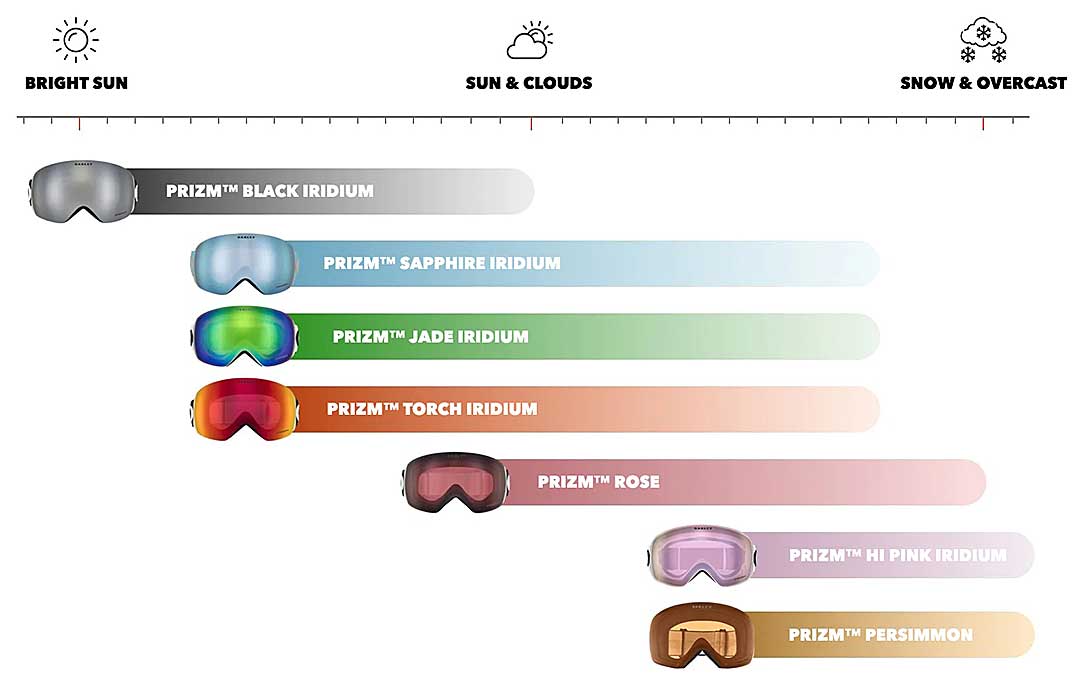
First of all, you need to determine what type of lens you should have, light, dark, or somewhere in between. The easiest way is to ask yourself, where do I usually ski, and what's the weather like there?
Sweden is not known for having the best weather, so a light lens for darkness and snow is usually recommended here. If you're heading to the Alps to shred or enjoy spring skiing when the sun is out, a darker lens is recommended.
Oakley Prizm Lens Guide:
VLT (Visible Light Transmission)
The amount of light that the lens lets in is measured on a scale called VLT, ranging from 0% to 100%. You can think of it this way: a completely black lens has a light transmission of 0%, and a completely transparent lens has a light transmission of 100%.
To simplify, you can think of a light lens for bad weather and a dark lens for good weather. Of course, there are all-around lenses that work well in most weather conditions. But it's usually worth buying an extra lens to cover a wider range of weather conditions. Some goggles even come with both a light and a dark lens.
Today, the focus is mainly on manufacturing lenses that enhance contrast. How frustrating is it when you're out snowboarding and can't see any contours in the snow? You can see the slope, but suddenly you're lying there with snow inside your pants because you didn't see that bump in the snow. Part of the snowboarding experience is actually being able to see. Poor visibility means self-doubt and can even be dangerous because you can't see anything.
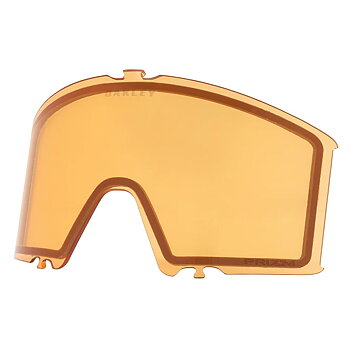
Today, manufacturers have almost completely moved away from yellow lenses to a more red tone because the red color enhances contrast more than the yellow color.
You've probably seen people skiing with completely transparent lenses or clear lenses, as they're also called. Clear lenses are only really good when it's dark outside and the lights are illuminating the slope, but in bright conditions, there's a risk of snow blindness, making it difficult to see the contours in the snow.
Expensive or cheap, what's the difference?
The price difference between expensive and cheap goggles is actually greater than you might think. So, what makes goggles more expensive? It's certainly the quality of the frame, ventilation, and the strap. But above all, it's the quality of the lens in terms of contrast, anti-fog, and material.
A more expensive goggle, such as Oakley's Prizm lens or Smith's ChromaPop, has significantly higher contrast than a cheap goggle. Everyone knows how frustrating it is not to see the contours in the snow on a cloudy day; you have no idea when there's a bump, and suddenly you're gliding down the slope. The more expensive goggles usually emphasize the contours in the snow better. It's not just empty words; there is a difference between a good and a bad lens.
If you feel tired in your eyes during the day, you probably have the wrong goggles. A more expensive goggle with a better lens is generally optically correct compared to a cheap goggle. Expensive ski goggles refract light better than cheap ones.
Anti-fog protection inside the lens is also better in more expensive goggles. Anti-fog protection is what prevents fogging on the inside of the lens. It's important here that you use it correctly, meaning you don't block the frame too much with thick buffs, etc.
With this, we want to say that even if you ski a little or a lot, it may be worth spending that extra money to get ski goggles with contrast in the lens and to prevent fogging.
Cylindrical or spherical lens?
There are two different types of lenses on the market: cylindrical and spherical. Flat and round/bowled, to put it simply. Here, it's more about which design you prefer rather than the function itself. When spherical lenses became popular, it was because they had a wider field of view than cylindrical lenses, but today, cylindrical lenses have become so good that you can choose based on appearance and fit. Both are equally good.
Fit with the helmet?
Now that you've become an expert on lenses, you naturally want to buy a pair of goggles that look good. But don't forget that they also need to fit well with the helmet. There is a well-known gap between the helmet and ski goggles, which in some cases is called the "tourist gap." This gap can occur between the helmet and the frame on the forehead if they don't fit together. The gap makes it cold on the forehead and very uncomfortable. Therefore, it's important to find a model that fits snugly with the helmet and is comfortable around the face. Fortunately, many modern helmets fit well with most ski goggles on the market.
Can I wear glasses under my goggles?
Now that we've gone through how important it is to be able to see in the ski slope, we mustn't forget that a large percentage of people wear glasses and also need extra eye protection to see on the slopes. Of course, there are ski goggles that fit over your own glasses, and the designation for this is OTG (Over the Glasses).
It can be tricky to find out if a pair of ski goggles has OTG. Sometimes it's written on the box, and other times it's not. Some manufacturers prominently mention it, while others don't even mention it in the description even though the ski goggles have OTG. For example, Oakley has OTG on 99% of their ski goggles, but it's not written on the box.
The tip is, of course, to ask the retailer or call customer service, but it's best if you can find out for yourself.
And then the question is, how do I see it?
OTG Ski goggles look exactly the same as regular ones, but the difference is that the frame is hollowed out in the padding on the sides to accommodate the arms of the glasses inside the ski goggles.
But be aware!
Some glasses do not fit in all OTG goggles, so it's important to test your glasses in ski goggles and make sure they fit. Check this before you remove the protective plastic and throw away the box.
How do I take care of my ski goggles?
Now that you've finally found the perfect ski goggles, you, of course, want to use them for many years and keep them in the best possible condition. Ski goggles are fairly sturdy, but you should still treat them as gently as a pair of regular glasses.
The lens is very sensitive and should only be cleaned with the included cleaning cloth or goggle bag. Don't use your gloves as they can easily scratch the lens. Instead, keep the cleaning cloth or goggle bag in your jacket pocket while you're out on the slopes. One tip is to turn the bag inside out in case you have gravel in your pocket.
WARNING! NEVER touch the inside of the lens.
The anti-fog protection on the inside is super sensitive. If you start touching the inside, you'll destroy the fog protection, and it will become a mess that can't be restored. If snow gets inside the lens, it's better to go inside, have a little break, and let the ski goggles air-dry. When your legs are tired, your toes are numb, and the sauna is ready, don't forget to take off the ski goggles from the helmet to prevent the straps from stretching.
Now that you've learned everything about ski goggles, we hope you feel confident in your purchase and that you'll have a lot of fun on the ski slopes. If there are still any uncertainties, you're always welcome to contact us at Stand Tall.
10 articles