

5 Things to Consider When Buying a New Snowboard
The jungle of snowboards is deep and intricate. It can feel like a challenge to find a board that suits you perfectly. Thousands of terms and English expressions don't make things easier. That's why we want to help you with five tips to consider when buying a new snowboard.
1. Where do you prefer to ride? What type of terrain?
2. Snowboard length
3. Snowboard width
4. Brand, price, and quality
5. Unsure? Ask us for help.
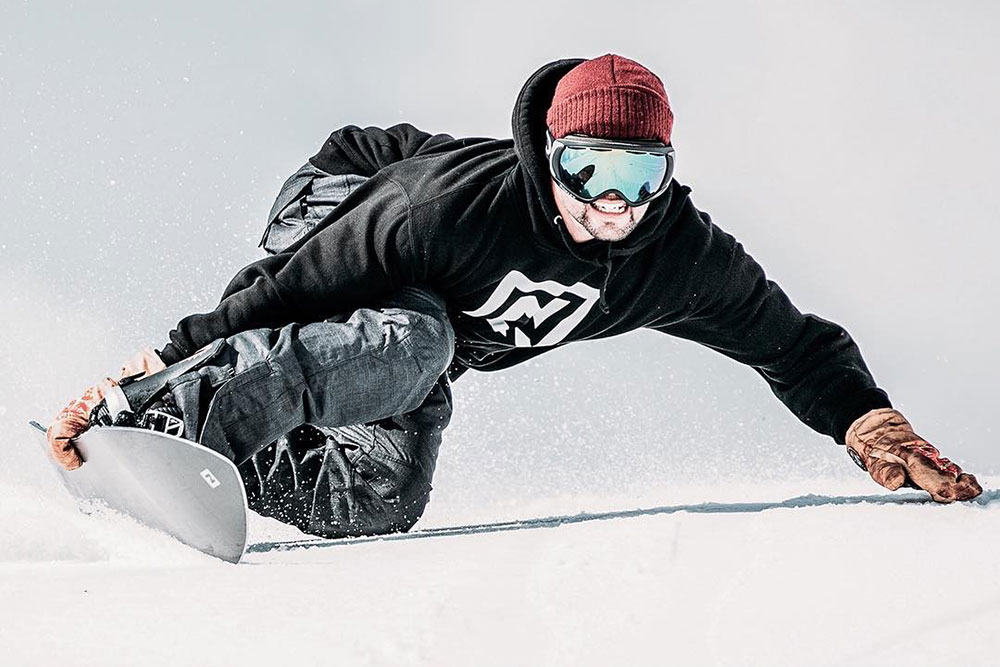
1. Where will you ride?
Pistes, park, powder, or maybe everywhere? We have chosen to categorize our boards into All Mountain, Freestyle, and Freeride. Below you will find explanations for the different terms.
All mountain: For those who enjoy riding all over the mountain and want a board that works everywhere. If you're a beginner, the boards in the all mountain category are what you should look for.
Freestyle: Perfect boards for those who spend time in the park. There are both soft and hard park boards. Soft park boards are great for rails and jibs, while a harder park board is for mastering big jumps. Some boards in this category also perform well on the slopes.
Freeride: If you're a powder hound who loves off-piste riding, then a freeride board is what you should have. A freeride board usually has a longer nose for better float in the powder. Many freeride boards are also great for those who enjoy riding on the slopes.
2. Snowboard Length
Make sure to buy the right length for your snowboard. There are differing opinions on how long a snowboard should be. A good rule of thumb is that the board should reach somewhere between your eyes and neck. If you're a beginner, a board that ends somewhere between your neck and chin is preferred. Your weight also plays a role here. Many of our boards have a "recommended rider weight" specification. Try to match it as closely as possible.
Shorter board = Easier to handle but can become unstable at higher speeds.
Longer board = Stable at higher speeds but can be challenging to maneuver for the inexperienced rider.
3. Snowboard Width
This is an extremely important factor to consider if you have larger feet. If your shoe size is larger than 43-44, you'll need a wider board. This is referred to as Mid Wide or Wide. In our snowboard guide, there's a table with recommended snowboard widths.
4. Brand, Price, and Quality
Brand: It's usually safer to buy from a well-known brand. We also recommend focusing on a specialized snowboard brand rather than a brand that has snowboards "on the side." All the boards on our site come from well-established brands that prioritize product development and continuous improvement.
Price: The price of the product is always a hot topic. However, it's often the case that a slightly more expensive product is of better quality and will have a longer lifespan. Then there's the question of "Do I need a board that expensive for my first board?" The answer is that you definitely don't need to. Our boards for beginners are usually somewhat more affordable. But if snowboarding is your passion, there's no reason to cut corners. But if you're reading this, that's probably not an issue.
Quality: If you follow the advice above regarding brand choice, you'll be satisfied with the quality of the product. You won't find low-quality products on our site.
5. Ask Us, and We'll Guide You
Send us an email, and we'll get back to you with recommendations that suit you.
Want to learn more? Read our snowboard guide.