
Learn how to Snowboard
Get Started with Snowboarding: Beginner's Guide
Snowboarding is the best thing ever; there's no better feeling. Don't hesitate to start learning to snowboard; it's worth every penny and minute. Even if it feels difficult and time-consuming at first, it will be worth it in the end. The feeling when you "get it" is powerful, and the freedom of going down the slope effortlessly is the best thing ever. This guide helps those considering starting snowboarding or those who need some guidance and tips on things to think about.Always remember that snowboarding is for fun; it's all about having as much fun as possible!
1. Choose where to ride:
It can be helpful to think a bit about where to take your first turns. Not everyone has nearby ski resorts, and it's important to find a suitable resort that is good for beginners. Therefore, some preparation might be necessary. Focus on resorts that can offer:
- Slopes designed for beginners
- Ski schools with the option to book snowboarding lessons
- Simple lift systems, such as anchor or button lifts
- Reasonable prices for lift passes
- Opportunities to rent the right equipment
2. Rent or buy equipment?
Renting or buying equipment can be a common question for many. Both have their advantages and disadvantages. If you are sure you will want to continue snowboarding, it is good and wise in the long run to buy your own equipment. But if you're unsure, it might be a good idea to rent the first time you go. This gives you a chance to try snowboarding without having to spend a lot of money right away.
Keep in mind:
- Beginner boards are often soft and forgiving
- Make sure you get the right equipment suited for you
- The staff can guide you to the right size and stance.
Besides the snowboard, bindings, and boots, you will also need:
- A good snowboard jacket, snowboard pants, and warm gloves/mittens
- Base layers and a mid-layer jacket to stay warm
- Goggles and a helmet
3. Come prepared to the slopes
To fully enjoy snowboarding - come to the slopes well-prepared. Check the weather beforehand so you know how to dress. It's not fun to be cold, so bring an extra layer just in case.
Dressing in layers offers the flexibility needed to quickly adapt to different temperatures. Being able to add or remove a layer allows you to stay comfortable whether the temperature rises or falls. Wool clothing and a waterproof jacket are invaluable when bad weather hits. Choose functional materials that effectively manage moisture and keep you warm. Specifically, jeans and cotton should be avoided, as these materials can retain moisture and make you cold.
4. Don’t underestimate a snowboard lesson
A snowboard lesson can be a great way to get you thinking about the right things now that you are learning to snowboard. A good push in the right direction, simply put. Snowboard instructors are good at teaching how to take the first steps to avoid bad habits and learning the wrong way. Snowboard instructors often have years of experience and can easily see what you need to work on. So don’t underestimate the snowboard lesson as an introduction. It can be well worth it in the long run. Often, you can shorten the learning curve significantly with the help of a snowboard instructor. There are both private lessons and group lessons. Starting with a private lesson can be preferable as you get direct tips and things to think about. To shorten the starting phase and avoid struggling for weeks without progress. Otherwise, group lessons are also fun as you make many friends to ride with in the future.
When your lesson is over, don’t hesitate to continue exploring the slopes on your own. Use the tips you received from the snowboard instructor and go at your own pace.
5. Focus on the basics
A good foundation to work on is important for your snowboarding. Watch how others in the slope do it, talk to others who snowboard or ask your snowboard instructor. Your snowboard instructor will teach you the basics, but there are additional things for beginners to keep in mind.
Standing on the board
Just standing on the board is one of the first things you can try. Strap in the bindings on flat ground to feel what it’s like to be secured. So it’s not completely unfamiliar to you when it’s time to ride. Feel how it is when you shift weight on the heel and toe edge, and move weight back and forth. Just to get a feel for what it’s like to be strapped in, as mentioned.
One foot push to move around
Another thing to try before heading up is to push yourself with the front foot strapped in and the back foot free. To feel the sensation. It’s also good to practice before your first time on the lift.
Tip: If you find it slippery between the bindings, you can buy a stomp pad, which gives you extra grip when riding the lift. Stomp pads are available here online or in our physical store in Gothenburg.
Riding the lift
Start with a button or anchor lift. Have the front foot strapped in and place the button or anchor between your legs, ask the lift operator for help. Look far ahead, keep your shoulders parallel, and knees slightly bent.
Riding down the slope
Basic riding technique and using the edges of the board to turn and control speed is key to learning. It’s hard but don’t give up. A classic is the "falling leaf". Slide down on the heel edge the entire slope. To get a feel for edge grip and balance. Then try the "falling leaf" on the toe edge. More difficult but it’s a good step before moving on to the next step.
Practice, practice, practice
Practice on the heel and toe edge separately. Then start riding on the heel edge across the entire slope. Then ride on the toe edge back to the other side. When you’ve done that a few times, it’s time to start transitioning from heel to toe edge and vice versa. It’s hard at first, but eventually, you’ll get it, and that feeling is the best. Practice, practice, practice, and don’t give up. Eventually, you’ll get it!
Practicing turns and controlling speed by switching between the board’s heel and toe edges can’t be overdone. It’s one of the first things your snowboard instructor will focus on since it forms the basis of snowboarding.
Spend as much time as possible on the board. The more you practice, the faster you’ll progress. It’s that simple. Don’t give up!
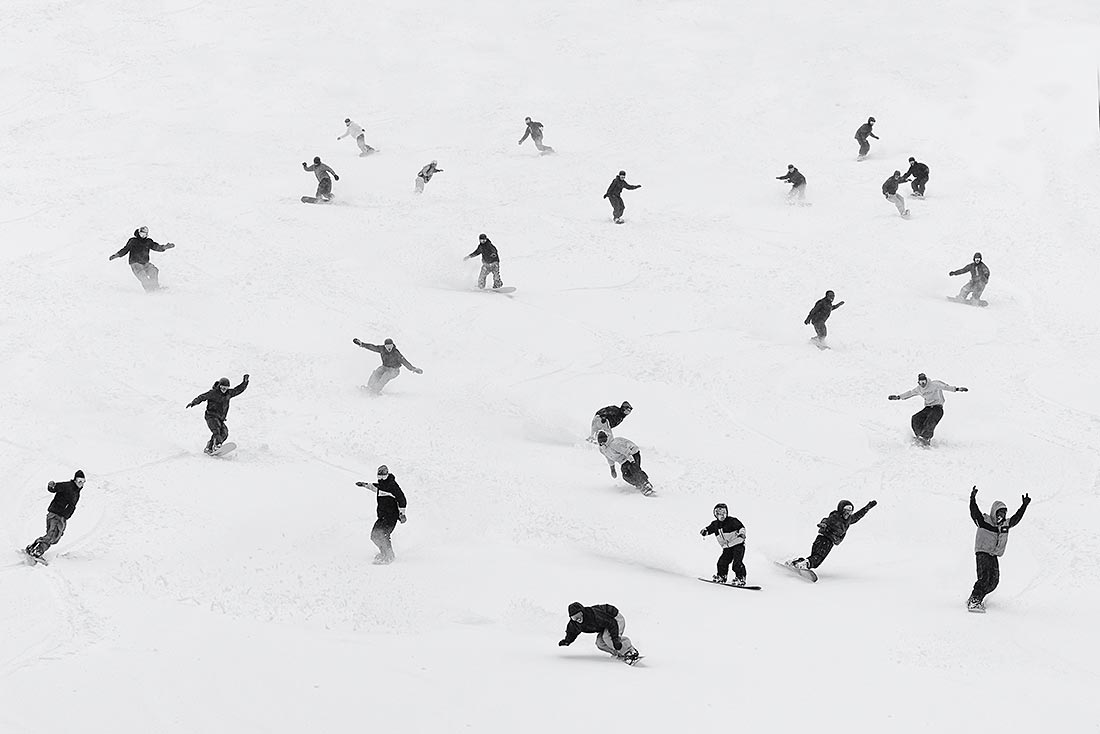
6. Snowboarding is the world’s best team sport.
Snowboarding is best done together. Period. Riding together with friends and pushing each other is the most fun and you develop much more than if you only ride alone. Gather your friends and go snowboarding!
We can’t emphasize enough the importance of patience and practice. That’s the key to learning to snowboard. Also, remember that snowboarding isn’t that serious. There are no rights or wrongs. You do as you want. Freedom is the best. Snowboarding is the best. See you on the slopes!